


Inside the Energy Transition
Edition #4 - The Energy System Behind Digital Infrastructure
January 2026
The Power Behind the Digital Economy
Digital infrastructure is becoming one of the fastest-growing forces shaping the energy transition. As AI accelerates and data-centre demand rises, the challenges our clients face are increasingly about power: securing it, integrating it, and building the teams able to deliver projects in a system that is already under strain.
Across the US and Europe, organisations are contending with rising electricity demand, slow grid connections, and long lead times for critical equipment. These pressures are creating new requirements for capability, from grid strategy and development leadership to high-voltage engineering, supply-chain resilience and operational excellence.
What we’re seeing at Brightsmith is clear. The companies moving fastest are those treating talent as early-stage infrastructure: mapping future capability needs, hiring ahead of delivery, and building teams that can operate confidently where energy and digital systems converge.
If you're planning growth, preparing new sites or reassessing leadership priorities for 2026, we're always here for a conversation.

The Numbers Behind the Transition
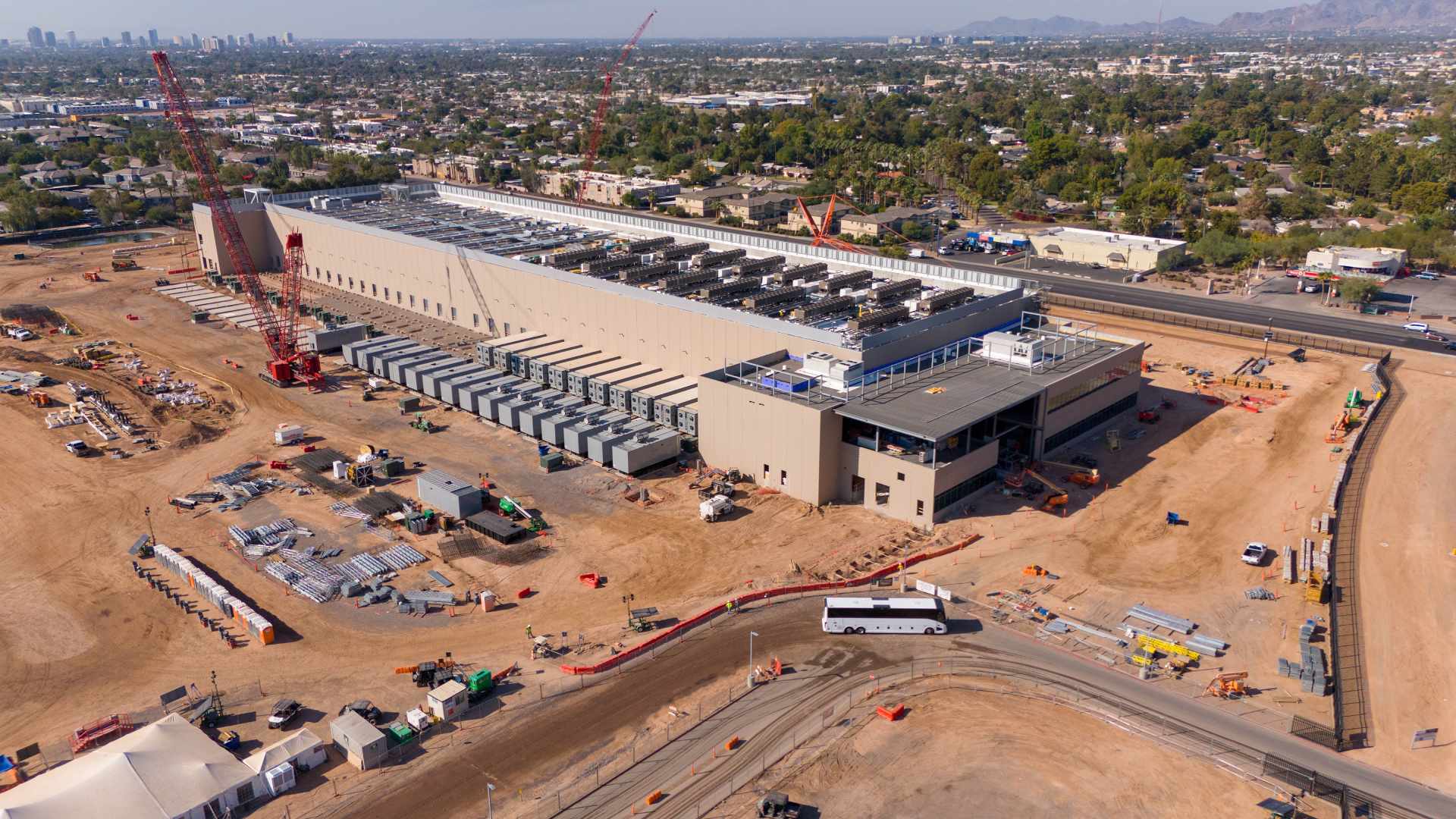
AI and digital infrastructure are no longer just IT loads, they are becoming one of the main drivers of new electricity demand. These figures show how quickly data-centre demand is colliding with the realities of clean generation, grid capacity and storage build-out.
United States
- Grid power for data centres is forecast to nearly triple this decade.
Utility power supplied to hyperscale, leased and crypto-mining data centres is expected to rise by around 22% in 2025 to about 61.8 GW, and reach roughly 134.4 GW by 2030. - Clean power is stuck in the queue.
In 2023, the US bulk-power interconnection queues contained almost 2,600 GW of generation and storage seeking connection, more than twice the existing US power-plant fleet, with over 95% of that pipeline in zero-carbon resources like wind, solar and batteries. - Data centres are driving a large share of future demand growth.
The IEA estimates that, under current policies, data centres could account for nearly half of all US electricity demand growth to 2030, putting direct pressure on how fast new clean capacity and transmission can be built.
Europe
- Data-centre electricity demand is set to surge.
Across Europe, electricity use by data centres is projected to climb from 96 TWh in 2024 to 168 TWh by 2030 and 236 TWh by 2035, almost a 150% increase in a decade, with their share of electricity demand rising from around 3% to over 5%. - Renewables are waiting at the grid edge.
Across 16 European countries, around 1,700 GW of renewable projects are currently stuck in grid connection queues, more than three times the additional capacity needed to hit 2030 climate and energy targets, while €7.2 billion of clean power was curtailed in 2024 alone because networks could not absorb it. - Europe must upgrade grids at unprecedented scale.
The European Commission estimates that around €584 billion of investment in electricity grids is needed this decade to integrate higher shares of renewables and electrification, while the IEA expects data centres to account for about 10% of EU electricity demand growth to 2030.
Digital infrastructure is not just another load, it is now one of the main stress tests for clean power build-out and grid readiness. These numbers show the gap between projected data-centre demand and the pace at which zero-carbon generation, storage and transmission are being connected.
Sources: S&P Global Commodity Insights / 451 Research; Lawrence Berkeley National Laboratory; IEA Electricity 2024 and Energy and AI; Ember; European Commission; ENTSO-E; E3G and related European grid analyses.
The Skills Crunch Behind Digital Infrastructure
Digital infrastructure is growing faster than the energy system that supports it. With data-centre demand accelerating and grid capacity struggling to keep pace, the biggest constraint emerging across the US and Europe isn’t hardware or capital, it’s capability.
As power availability becomes the deciding factor in whether projects move forward, organisations increasingly need people who can bridge energy and digital infrastructure. That includes leaders who can interpret interconnection queues, secure viable power pathways, and design projects around storage, on-site generation and transmission realities. These are skills most companies did not need five years ago, and the supply of experienced talent is thin.
Pressure is intensifying inside the grid ecosystem too. High-voltage engineering, system planning and protection expertise are already scarce, and demand is rising sharply as both regions attempt to connect unprecedented volumes of renewables. With gigawatts of clean power sitting in queues, operators, utilities and hyperscalers are drawing from the same limited talent pool.
Supply-chain and manufacturing capability is becoming another priority. Extended lead times for transformers and HV equipment mean organisations need leaders who understand long-cycle industrial production, diversified sourcing and strategic supplier management. Without that expertise, critical-path delays become unavoidable.
For executive teams, the takeaway is clear:
Energy fluency is now a core leadership requirement. Companies that build teams capable of navigating power constraints, grid complexity and supply-chain risk will be the ones able to scale digital infrastructure at the speed the market now demands.
Sources: Environmental Entrepreneurs (E2) Clean Energy Jobs Report 2024; SolarPower Europe EU Solar Jobs Report 2025; European Commission sector data; Brightsmith market intelligence.
Conversations in Cleantech
As we prepare for the launch of Season 10, we’re revisiting a few standout moments from recent Conversations in Cleantech episodes — insights that continue to shape how we think about leadership, infrastructure and capital across the energy transition.
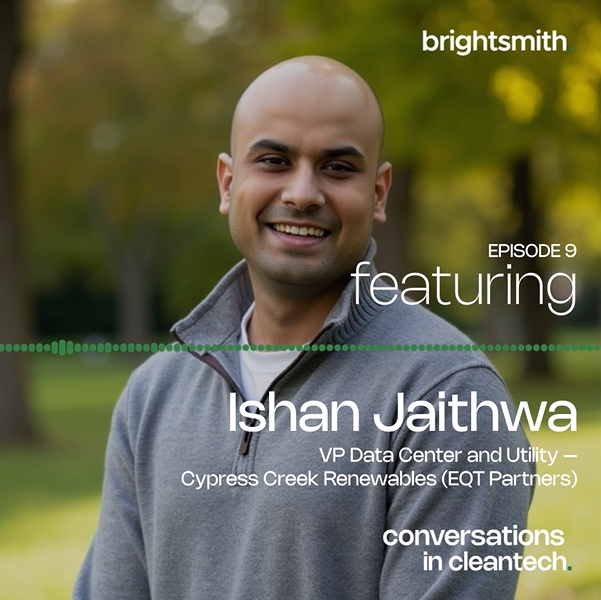
Ishan Jaithwa
VP Data Center & Utility, Cypress Creek Renewables
“Nobody was planning for AI and machine learning to drive demand at this scale. Utilities weren’t ready for growth like what we’re seeing now, and there was no rulebook for how to deliver gigawatt-scale capacity this fast.”
Listen Now →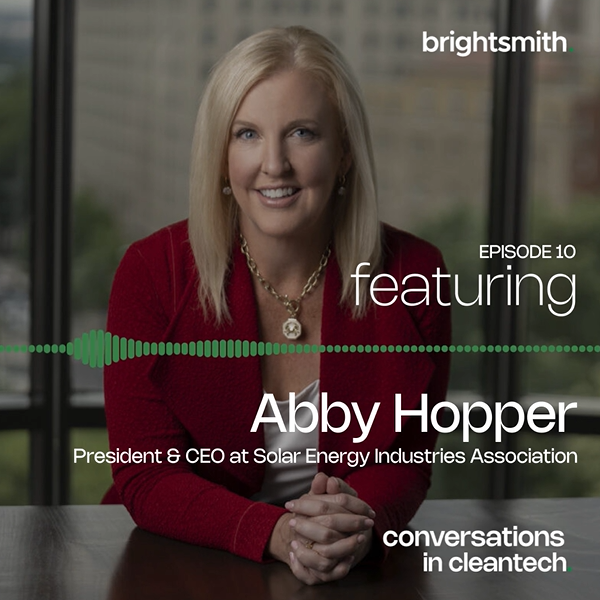
Abby Hopper
President & CEO, SEIA
“You don’t have to be the subject matter expert to enter a new industry. That’s a limitation we place on ourselves, not a requirement of leadership.”
Listen Now →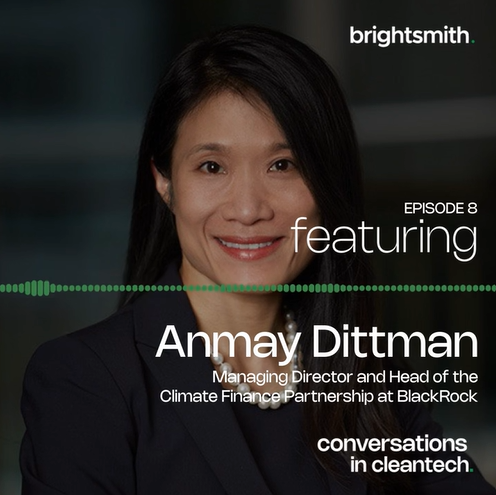
Anmay Ditman
Managing Director and Head of the Climate Finance Partnership at Global Infrastructure Partners (GIP), part of BlackRock
“If we didn’t mobilise private capital at scale into this vehicle, then we would have failed anyway. It couldn’t just work for catalytic investors, it had to genuinely resonate with institutional investors as well.”
Listen Now →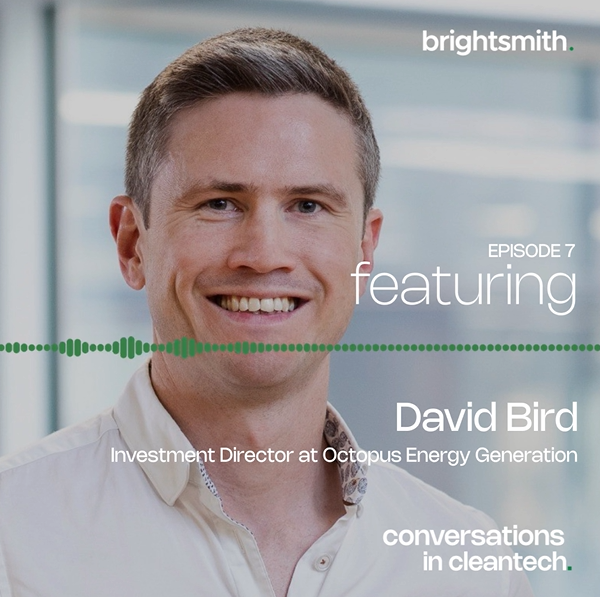
David Bird
Managing Director and Head of the Climate Finance Partnership at ORIT
“The fact remains that in almost every country and in every region, wind and solar, often supported by battery storage, is the cheapest way of delivering that new power.”
Listen Now →Season 10 launches on 27 January, with a focus on digital infrastructure and the leaders navigating AI-driven power demand, grid constraints and system-level scale.
Deep Dive: The Industrial Buildout Behind Digital Infrastructure
Written by Richard Ashworth-Lord, Senior Manager who leads our manufacturing service, this article examines the unprecedented wave of U.S. manufacturing construction now reshaping the talent landscape across clean tech, semiconductors, EV supply chains and advanced materials.
Richard highlights how more than $223 billion in active manufacturing construction and 46 megaprojects exceeding $560 billion in committed capital are signalling a once-in-a-generation expansion of industrial capacity. While headlines show flat manufacturing employment, the real story is the lag: thousands of fabs, gigafactories and component plants are moving from construction to ramp between 2026 and 2028, creating acute demand for technicians, process engineers, facilities teams, automation specialists and clean-energy manufacturing talent.
As supply chains localise and operational hiring begins to scale, organisations will need leaders who can build multi-year workforce strategies, tap adjacent talent pools, and design resilient training and progression pathways. The companies that begin planning pre-commissioning will be the ones ready for the industrial boom ahead.
Current Opportunities in Europe & the US
Director of Engineering London, UK
Operations Director Oslo, Norway
Head of Electrical Engineering United States (Remote)
Director of Finance Berlin, Germany
Senior Project Manager Germany (remote)
Head of Product London, UK
Director of Marketing United States (Remote)
Head of Planning London, UK
Director of Business Development United States (Remote)
Director of Business Development & Strategy New York, United States
Events
2025 was a year of being present. We hosted our own conversations, partnered with like-minded organisations and spent time on the ground at major industry events, listening closely to the people shaping the energy transition.
From executive-level panels and founder gatherings to global conferences and expos, these moments gave us deeper insight into how leadership, talent and delivery are evolving across clean power, fuels, mobility and digital infrastructure.
On the Road | Global Industry Events
Our team attended Hydrogen Technology World Expo and Carbon Capture Technology World Expo, spending time with founders, operators and investors to understand how innovation is translating into real-world deployment.
Navigating Your Career at the Executive Level
A panel discussion and networking evening for women across the energy transition, delivered in partnership with Third House. The conversation focused on executive career progression, leadership, redefining success and supporting the next generation of leaders.
Holiday Cheers | Founders & Executives Happy Hour
An end-of-year gathering for founders and senior executives across clean power, fuels, mobility and digital infrastructure, designed to strengthen cross-sector relationships and reflect on a year of rapid change.
As we move into 2026, we’re building on this momentum. We’ll be hosting new events, partnering with industry peers and continuing to show up at conferences and expos across the UK, Europe and the US, creating spaces for thoughtful conversation and connection throughout the year.

Let’s Talk Talent
2026 is already testing how quickly organisations can move from intent to action. Delivery timelines are tightening, investment scrutiny is higher, and the margin for hiring missteps is smaller than ever.
Brightsmith works alongside industry, professional services and investment teams to bring in leaders who can step in, take ownership and move projects forward, across engineering, operations, commercial strategy, policy and delivery.
If you’re making decisions this year that will shape the next phase of your business, we help ensure the people behind them are the right ones.

